
The Georgia Educational Technology Conference (GaETC) empowers educators with cutting-edge tools, hands-on training, and networking opportunities. This November 4-6, the GaETC theme of “Playbook for Progress” will inspire attendees to come together and design the next winning game plan for teaching and learning. Just like a great playbook, effective educational technology requires vision, teamwork, and the ability to pivot in real time.
Someone who can run superbowl rings around other presenters when it comes to living these concepts is GaETC 2026 keynote speaker, Malcolm Mitchell. Not only is Mitchell a former starting wide receiver in the NFL – and local University of Georgia Bulldogs star – but an award-winning children’s book author and dedicated advocate of child literacy.
Winning a Super Bowl might make the highlight reel, but most would consider Mitchell’s feats off the field serving more than 3.5 million students through his Share the Magic Foundation an even bigger accomplishment.
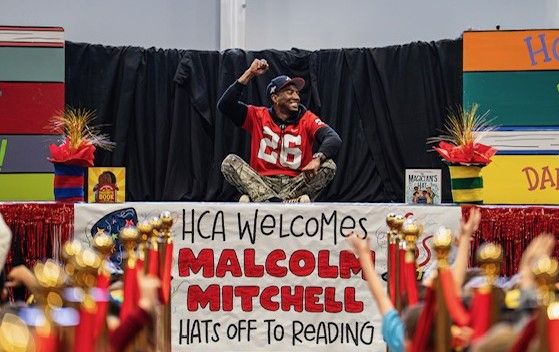
A Playbook for Literacy Progress
“A strong playbook starts by identifying the fundamentals,” says Mitchell. “In education, literacy is the fundamental that makes every other opportunity possible. When leaders build a clear strategy around ensuring every child can read, they create a foundation that allows innovation, technology, and teaching to move students forward.”
From Mitchell’s experience, the stakes could not be higher. The “why” for founding Share the Magic was, bluntly, “Children who struggle to read often drop out of school, live in poverty, and end up in jail,” he says. Mitchell faced similar challenges and re-directed his life through reading.
“I grew up in Valdosta, Georgia, a community where football reigned supreme,” says Mitchell. “So like many kids, I gave that the majority, if not all, of my attention. Once I got to the University of Georgia, I was placed in a different environment. I began to notice things that I hadn’t in my hometown.”
Mitchell saw people take a very determined approach to education, which forced him to ask himself the question, ‘Is it that important?’ It confused the Georgia native because the student who had the highest grade point average didn’t get the most attention. It was the star athlete.
“I was under the overwhelming conviction that if you were a good athlete, that’s all that was required,” he says. “Being on the campus of University of Georgia proved that notion to be incorrect. I realized that while athletics are great and provide a platform that, in many cases, can’t be matched, there’s something that is of greater value, and that’s being literate.”
Malcolm Mitchell’s Share the Magic Foundation Playbook
- Increase access to print. Creating access to age-appropriate books is proven to almost triple interest in reading within months.
- Improve reading interest. “Our virtual reading challenges were created to inspire and encourage kids to read in a game-like environment,” he says.
- Enhance reading skills. “We want kids to engage in reading more frequently, ultimately improving their grade-level reading standards, preventing academic failure,” Mitchell says.
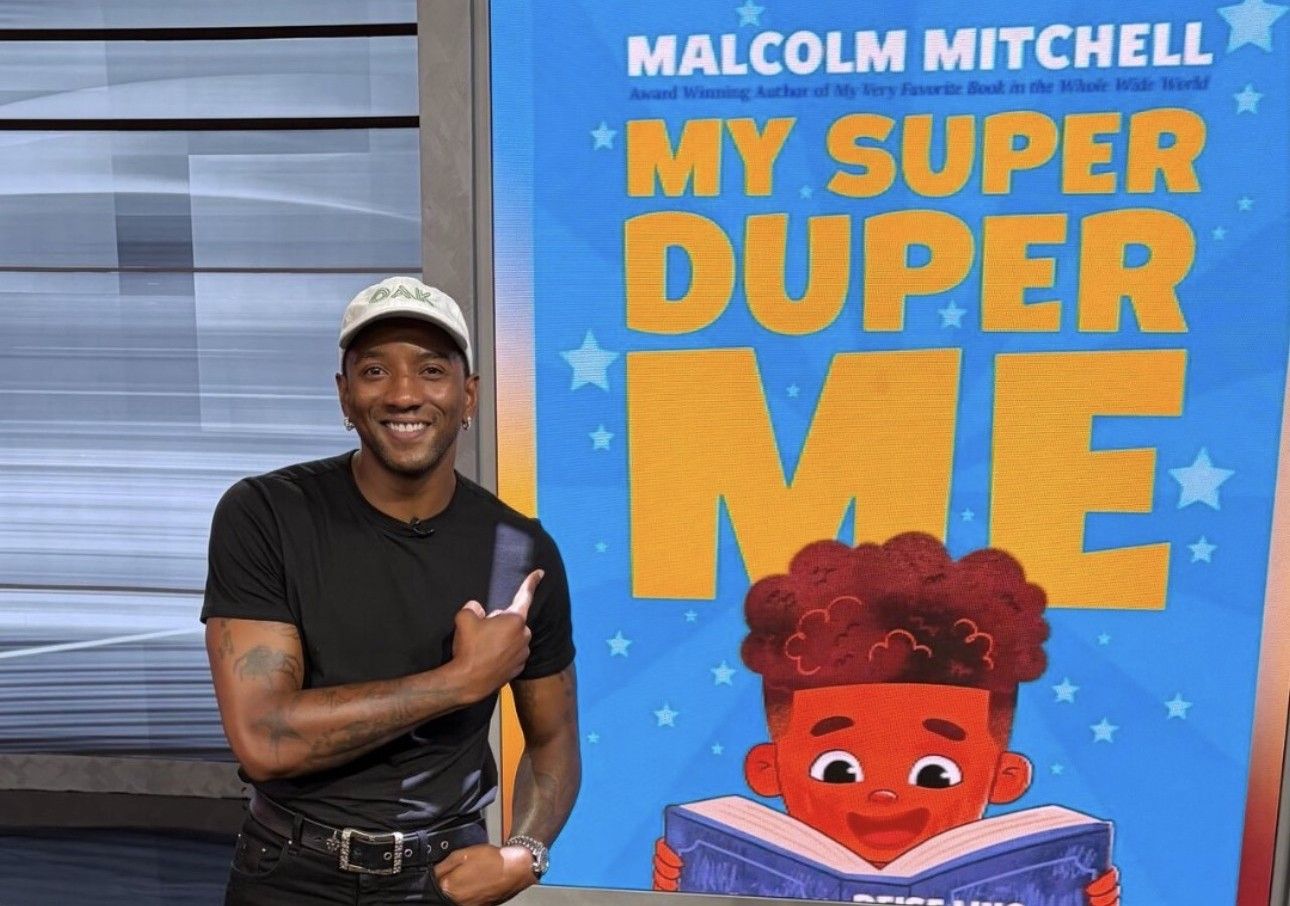
Mitchell’s Winning Second Half
Discovering reading as a college freshman changed the trajectory of Mitchell’s life, bringing him to his work championing literacy through Share the Magic.
“It came down to wanting to be the best I could be,” Mitchell says. “Sport allows you to be the best you can be in that individualized activity, but outside of that, it does almost nothing. If you make it professionally, it can give you financial resources which you could use to accomplish things. However, reading really positioned itself as this tool that could be used to electrify all sides of myself.”
Mitchell realized that literacy was the key to fulfilling his potential. “I really wanted to be in a position to help my family. Yes, football would give me a glimpse into that, but it won’t really help me sustain it,” he says. “Reading was clearly the thing that could supercharge anything.”
Illiteracy is a complex problem to solve, adding even more importance to summits such as GaETC. Mitchell notes limited financial resources sometimes create limited access to tools you need to foster different outcomes.
“I do not believe that poverty is the cause for illiteracy, I think illiteracy is the cause of poverty,” he says. “There’s not a parent I’ve encountered that wants their child to struggle academically. The question is, what information is needed, what skills need to be practiced and what resources need to be provided to create a culture of reading excellence.”
Making Tech a Teammate

When it comes to reading and supporting children in literacy, tech can be a great teammate.
“My foundation hosts digital reading challenges,” says Mitchell. “We also use tangible book approaches, but it’s limited, whether due to access or cost. The digital approach takes down some of the barriers that restrict engagement. My organization serves a million students a year, with only 5% through my interacting with the students and giving them tangible books. You can connect with more people by using technology”
Mitchell and his team have visited countless schools across the country. The foundation’s digital platform serves all fifty states as well as nineteen other countries.
“We launched a symposium called Read University this year,” says Mitchell. “We’ve worked with Kennesaw State University creating micro-credentials. We connected with Atlanta Speech School and the Rollins Center to ensure the books we use and how we present them is most effective in the classroom.”
Mitchell is proud of the partnerships he’s forged and what he’s done the past decade to boost literacy, but the work is far from over.
“We are continuing to search for innovative ways to connect with educators and students to foster or ignite a passion for literacy, but also be a resource for educators, local leaders and state agency policymakers,” he says. “While passion definitely plays a huge role in charging me up and energizing me throughout the process, it’s really become a mission.”
What to Expect from Mitchell’s Keynote

A Malcolm Mitchell speech isn’t your run-of-the-mill conference experience.
“I’m appreciative of any opportunity to share my story and contribute to what I think is Georgia’s, and really the country’s, ambition to increase literacy rates, knowing it determines outcomes for communities,” says Mitchell. “I do my best to be authentic. I highlight the barriers I faced in embracing reading. The point of my not shying away from my truths is to highlight a different perspective that can inform or help leaders build a strategy to increase engagement.”
Innovation in education doesn’t happen by chance—it’s built through strategy, collaboration, and a willingness to adapt. GaETC attendees will explore emerging trends, get inspired by award-winning speakers, and discover groundbreaking technology while gaining access to expert insights and exclusive resources
“I think my greatest value-add in being the keynote speaker for GaETC 2026 is sharing my authentic story and sharing what I have learned through visiting so many communities throughout the state of Georgia and beyond,” says Mitchell. “Plus, I think I tell some pretty good jokes. I also usually bring a football with me, so I hope we have some people in the room that know how to catch.”
4 Truths Malcom Mitchell Learned Through Share the Magic
- There’s a cultural disconnection between the value of reading and the outcomes it can help you produce in society. Students who play football know if they make it to the NFL, they will be in a position to do something they couldn’t have previously. Many communities aren’t aware that reading can provide the same opportunity.
- Reading is a skill that has to be developed in the same way that a person learning to play football develops. Some people think you either can read or you can’t, but no one is born a reader. It is a skillset that needs to be practiced and developed. People might not remember learning to read, just like I can’t remember learning to catch a football because it was so early.
- In a community where reading is not shown visually, it’s hard to embrace it or imagine yourself engaged with it in any capacity. If there are no books in the home, if there are no bookstores nearby, if there’s no one reading on the front lawn or backyard like I see in affluent neighborhoods, you ask yourself, “Is this something I’m even permitted to do?” I’ve never seen it from someone who looks like me or within my family dynamics. It’s almost like a need for permission to engage.
- Illiteracy does not discriminate. It does not care who you are, it does not care where you are, it does not care how much money you have. If the foundation for building the skills to be literate are not there, illiteracy is coming for you. I have seen it in every community – affluent, middle class and impoverished communities. Illiteracy runs rampant when the foundational tools aren’t consistent or there at all.
