
While some major city school systems around the U.S. are shutting down AI, Frank Murray, Chief Technology Officer of Belton Independent School District in Texas, sees benefits when used correctly. Noting time poverty as a huge issue in education, AI tools can preserve time to solve pain points and best support quality connections with the students.
“We’re heavily into the AI ecosystem,” says Murray. “We’re on year two of promoting AI use in our district between teachers, students, departments and staff. We use AI to pull data every month on the back end to see how much time our students are spending on screens at school and what sites are they actually using the most. By 2030, the number one job skill needed is going to be AI prompting and big data. The biggest thing we know is that we have to train our students how to use AI ethically.”
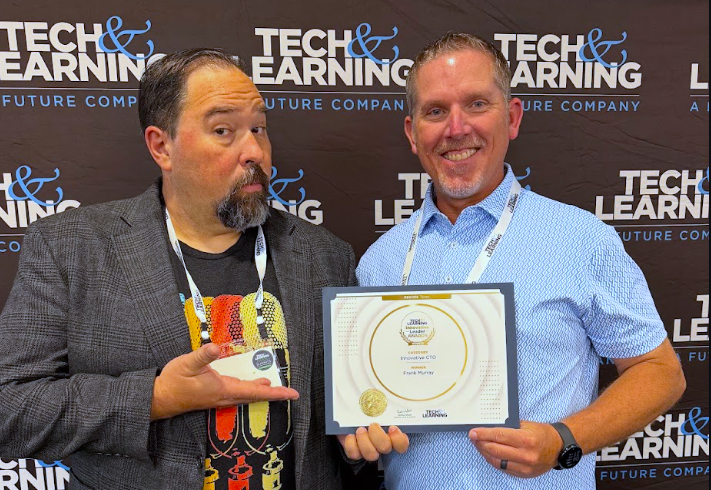
Murray, a visionary, yet grounded, leader, has fundamentally transformed the district’s operational and technological landscape through high-level strategic foresight and boots-on-the-ground work ethic.
“We have 13,650 students, 21 campuses, 2,100 staff, 32 just in the technology department. as well as PEIMS,” he says. “My day-to-day is to oversee everything ‘technology’ in the district, to help with our virtual learning academy that we just set up, to help with instructional technology – just the gamut.”
Murray, who was recently recognized with a Tech & Learning Innovative Leader Award for this and other efforts, shares how CTOS as well as educators and students can effectively and ethically use AI to save time in their busy schedules, as well as the results of his efforts to be a catalyst for modernization, including helping to launch a virtual school.
7 Ways CTOs Can Use AI to Benefit Their Schools
School Scheduling: “We did all of our secondary schools’ master scheduling using AI Studio this year,” Murray says. “This cut the time to build a master schedule drastically.”
Multi-Tiered System of Supports: The district is doing an MTSS pilot with a lot of AI tools to help provide support at a few of its elementary schools.
Weather Rescheduling: If it rains, redoing the grounds crew schedule takes minutes with AI. “What could take hours before is accomplished in three minutes,” he says.
Professional Learning: We “are using AI for flipped leadership meetings where our leaders listen to podcasts in advance, giving 20 minutes for discussion time about those topics, preserving more time to dive into what’s going on in our district,” Murray says.
Custodial Scheduling: “Our custodial department is piloting GEMS to build scheduling for all our custodians in the district based on the school,” he says. “Rather than a simple to-do list for the night, it breaks down tasks, meal and break times into 15 minute schedule segments that can guide the whole work period with maps to ensure efficient, full school coverage.”
Chromebook Management: “One of our people, Tina, built a new inventory system with AI where you scan the Chromebook cart and then it automatically kicks out what devices it should include,” Murray says. “She built that in a day, and now all our campus technicians just go scan a cart and know where everything belongs.”
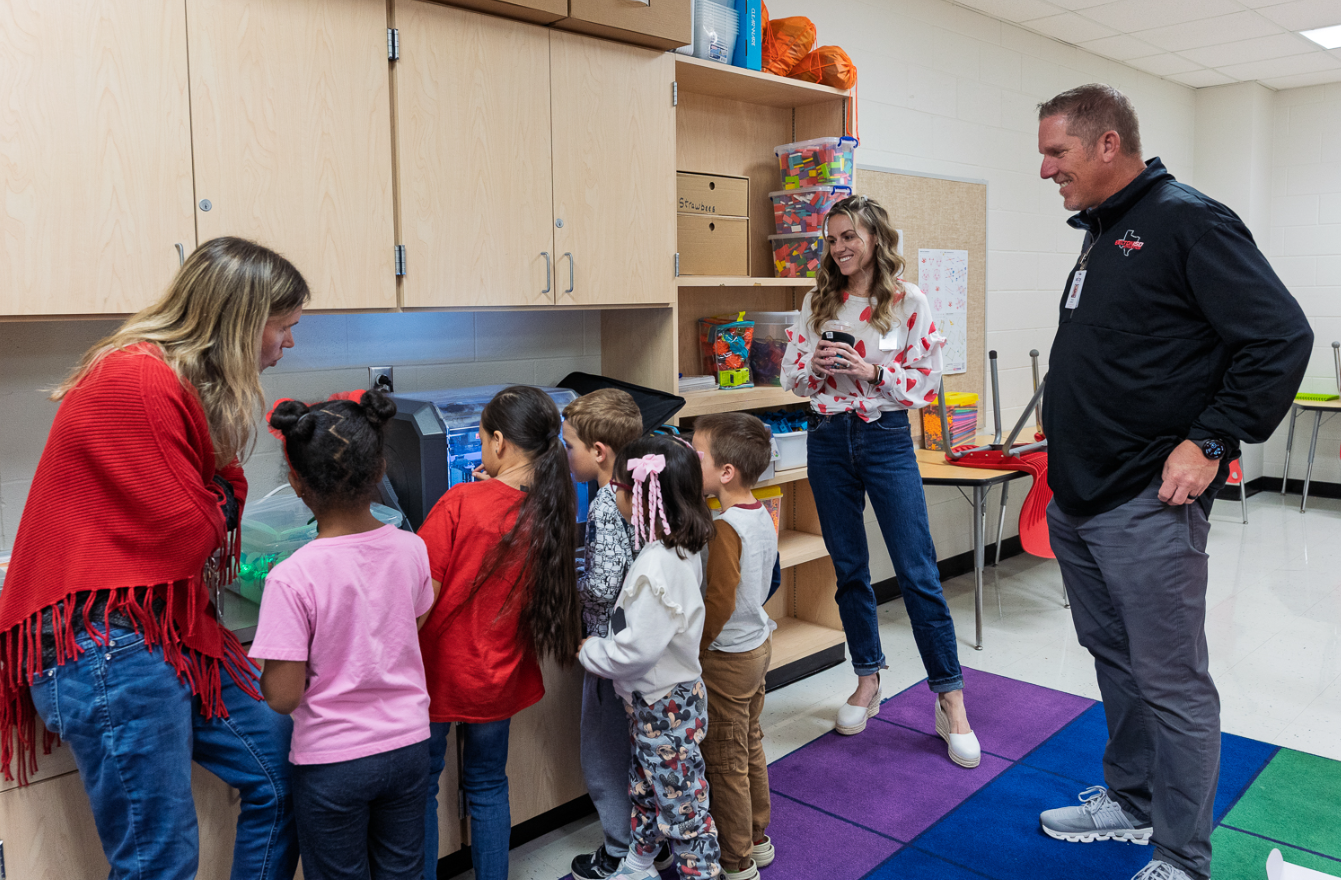
Thought Partner: The district has been promoting AI as a thought partner. “We have Gemini for students turned on for all students in the district,” Murray says. “We work with teachers on building Gemini Notebooks and GEMS to help in the classroom to be that resource.”
School Is Where The Student Is
One of the major programs that Murray helped implement is the Spalding BISD Virtual Learning Academy, which was launched this year. This option for students gives flexibility to meet students quite literally where they are. The program is available for students in grades 9 through 12 who reside anywhere in the state of Texas.
“Students can attend in a full virtual mode or in a hybrid model,” Murray says. “It helps so many students with its flexibility. Some come and participate in person to their CTE classes, but use the virtual courses for the rest of their courses.”
This creates an opportunity for academic success for every student. It particularly supports those with specific needs or dreams who prefer to spend their time focusing on developing their gifts without scheduling conflicts.
“Our drum major at Belton High School attends almost fully virtual, but comes for band,” Murray says. “We have a cheerleader that does the same thing at Lake Belton High School. We have swimmers that only come for the swim period.”
Students can take as little as one class in person, go completely virtual, or split their schedule to work around their needs. This flexible option delivers the same quality of education and full course load regardless of learning mode. This can be life-changing for students with caretaking challenges at home, who need to work to support their families, or who have accessibility needs making home a more comfortable learning setting.
“You can get your doctorate online today. What’s the difference?” Murray asks. “:Why are we not meeting kids where they are in high school? It’s so great when counselors are talking with students who say, ‘School’s not for me, I think I’m gonna go homeschool,’ but we have an opportunity for them to stay in school and be a part of something bigger. They can be a part of our school, still walk across the stage being a Tiger, a Bronco, or a Dragon.”
The virtual school currently serves students in grades 9-12, but Murray and his team is looking to expand the program. Students not only gain a format they can be successful in, but a sense of community.
“Watching students be very successful online, and still be able to come to prom, still be able to come and use the libraries with the other kids even if they’re fully virtual? It gets them to feel like they are a part of the community,” he says. “We are the Big Red community here in Belmont State, so we want them to be proud to be a part of the Big Red community.”
The Daily Breakdown
To ensure students receive a well-rounded experience, an Innovation Specialist’s day is carefully balanced across four key areas:
|
Time Allocation |
Focus Area |
Description |
|
30% |
STEM |
Facilitating hands-on Science, Technology, Engineering, and Math challenges. |
|
30% |
Library Services |
Managing collections, guiding research, and fostering a foundational love of reading. |
|
30% |
GT Services |
Providing direct pull-out support and advanced enrichment for Gifted & Talented students. |
|
10% |
Planning & Conference |
Lunch, lesson preparation, and collaborating with classroom teachers. |
Student for a Day
Colleagues note Murray’s leadership style is defined by its lack of ego. He is just as likely to be found assisting with grounds projects or navigating Special Education Medicaid (SHARS) paperwork as he is leading a district-wide technology strategy meeting. The “first-in, last-out” leader refuses to delegate work he wouldn’t do himself.
A perfect illustration of his “get-your-hands-dirty” mentality is seen in a unique student-centered program. Sometimes the best way to understand what students need is to put yourself in their shoes. Murray puts himself in their desk.
“There’s something I do every year–it’s called Student for a Day,” he says. “I’ll call a secondary school and say, ‘Send me five schedules. I want them all on level, no advanced classes, no dual credit, just on-level students, because I want to feel what they go through in a day at school.’”
With schedule in hand, Murray heads off to school
“I want to understand, what does that day look like for them?” he says. “I pick one of the schedules and meet the student right before school, and then I go sit in class and do the work all day with the student.”
Putting himself into the picture gives Murray much more insight than just observing from afar.
“I sit with them and chat as we walk to classes. It allows me to ask them questions. ‘Why do you come to school? Who’s your favorite teacher? Why is that your favorite teacher? What’s your favorite subject and why? What do you feel about the technology we’re putting in your hands? What’s your favorite tool to use and why is that? Why is the LMS working for you or why is it not?’ That’s the day I really get the data I need rather than just walking into schools.”
What Murray really wants to understand is the why of what makes school and its tech work for kids and how to both continue and expand on those success points.
“I’m spending the day building a relationship with that student to ask questions,” he says. “I sit with them at lunch and I’m able to ask all their buddies, ‘Exactly what brings you all to school?’ We know that extracurricular activities usually bring students to school, or the CTE courses. That’s what they’re there for, what they’re excited for. So we want to make sure that we can provide that for our students using technology, and this does.”
It’s not uncommon for students to bond with some teachers, and sadly, find some educators at the core of why they are not excited to attend school. Murray’s virtual academy also solves that problem.
“We have a student at Belton New Tech, our application-only, project-based learning high school,” he says. “He only comes for history because he loves that history teacher. He loves that subject. So he does all his work from home online other than coming for history class every day. Learning more about their experience not only helps us give those students a choice of their education, but it also allows them to be a part of something bigger.”
Student Success Stories
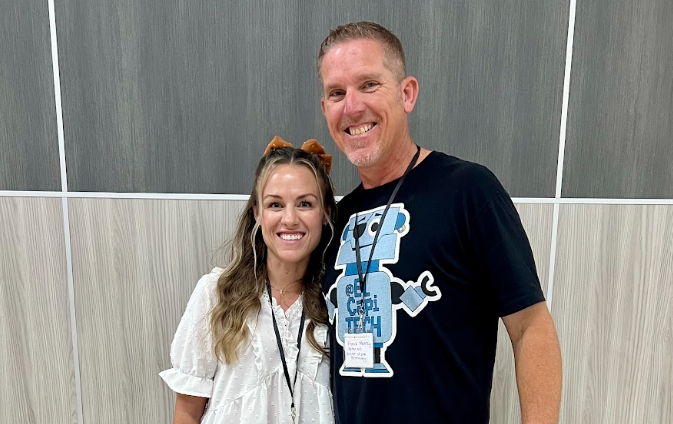
Murray has vowed to ensure his department gives educators and students everything they need to be successful, bringing ticket times down to 24 hours with response time under three hours. This dedication is just one element of some very inspiring success stories.
“We have students that are trained through an Acer Techsperts course, who then repair devices for us,” he says. “Last year we included Landon, one of our Delta students, which are 18 to 21 students with special needs who we continue to educate. We got him started on the coursework and he was able to get his Techspert certification. He comes over a few days a week to one of our high schools and fixes Chromebooks.”
The student even toured the Acer repair facility recently.
“We talk about meeting students where they’re at, and that’s what he was excited about,” Murray says. “We tried to make that dream come true for him. He graduates in December and he will be getting a brand new nice Chromebook for his hard work in our Techsperts program to take along with him.”
Two other students at Lake Belton High School started “Begin Fin,” a beginner finance resource.
“They started their junior year when they noted our limited resources in training students on financial literacy,” he says. “They created this fully free, open-source, now being used in over 250 countries. AI allowed them to code this on the backend using Gemini, moving over to AI Studio and a tie-in with the APIs to Google Classroom. Talk about the journey to graduate competencies and how AI can help with that – it’s pretty amazing. We are so proud of our students!”
Tools They Use
- Chromebook Plus
- Google Workspace
- Gemini
- Sam’s Lab
- Cybernut
- Managed Methods
- Lightspeed Systems
- Renaissance
