
Connecting Schools with Industry Partners
Stacey Johnson, Director of Workforce and Industry Partnerships, Business & Entrepreneur Partnerships at the University at Buffalo, led this session talking about her institution’s efforts in forging industry partnerships.
After initially deciding to build out their CTE program, Johnson got space donated and has subsequently launched five CTE centers that now place more than 1,300 students.
Johnson talked about having the right people at the table in terms of industry partners and empowering them to do what they do really, really well. And that those partners should be actively helping to make a change, and if they are not, then it’s okay to move on to other partners.
“We saw lots of kids being trained, but getting placed in low-paying positions, and that needed to change,” Johnson said. “We worked to modernize and update existing programs to help students to really prepare for careers, not just help provide cheap labor for companies.” She emphasized that in addition to being transparent about all your efforts, when you find those true partners, they should help design the programs from the ground up, and help students with skills such as communication and problem-solving. For example, she mentioned how they’ve brought in partners who use AI in their work rather than just teaching AI on its own. She also discussed the need to reach down into the curriculum around workplace learning and internships, and modernize all of it.
Johnson recommended reaching out to, connecting with, and touring similar programs, as well as actually visiting partner sites to better inform your CTE program and prepare students for their internships or placements. She also noted the need to try different strategies that students can actually access to help find success, such as having a recent past graduate speaking directly to students as their experiences will be much closer to those of current students.
Johnson stressed the importance of needing partners to actually show up, and that they can’t just be a name on a list that looks good for them in terms of public relations. They have to be present and participate, and assist in building personal relationships and connections.
Finally, she said, “It’s okay to say no – sometimes someone who wants to be your partner might not be the best partner for you. They need to be genuinely invested in your partnership.”
What AI Can’t Do: Equipping Students with Essential Workplace Skills
For this roundtable discussion with Jennifer Freedman, Director of Instructional Technology and Innovation at Lindenhurst UFSD, the main themes were the importance of human judgment, creativity, critical thinking, and empathy in an AI-driven world. The central question was how AI can expand students’ learning without replacing their own creative development.
One practical example was a traffic-light system for guiding AI use, with teachers setting clear boundaries for each assignment. Green means students can use AI freely; yellow allows it for specific tasks, such as brainstorming, while students complete the work themselves; and red means AI use is off-limits.
Educators agreed that AI can be a useful tool for ideation and iteration, but students still need to take the lead in creating the final product and demonstrating their understanding of the concepts behind a lesson.
The discussion also explored skills students need to develop before entering the workforce. These include AI fact-checking and source evaluation.
Neurodiverse Workforce Development
Edward Cohen, Assistant Director at the Rutgers Center for Mathematics, Science, and Computer Education, led the discussion talking about the workforce development program at his institution for neurodiverse students. He started by noting that 90-95% of neurodiverse students don’t have leisure activities on campus available to them, so his team’s first goal is to look for “low-hanging fruit” to find what his students are interested in, such as using a makerspace, or working with lasers, woodworking, or 3D printing.
Once discovering activities that they find engaging, the next goal is translating that into a potential meaningful career, beyond an entry-level job such as cafeteria work, which many neurodiverse students do. For example, they’ve offered mat making (cutting) in conjunction with Michael’s, which has helped students get certified and then hired for real jobs.
They also work with behaviorists to teach students coping skills, problem-solving (to find a friend to help, for example, when stuck), and then reducing those behaviors so they can work.
Cohen reported that the success rate was good for Year 1 of the program, although they did cherry-pick higher-functioning students (ages 18-26) to start. The 2nd year was a little more challenging as it included some students with ADHD, which created a challenge around redirecting.
Attendees discussed other CTE programs for neurodiverse students, such as those at Butler Tech and The Nicholas Center, and noted that more facilities are being built to accommodate these students and programs.
One challenge is to support students but then many age out of programs, as well as those trying to cover the gap for those who graduate high school and then don’t have a next step. Another challenge is getting info to parents and students as there’s a disconnect at this level, and you need the support of active parents. It can also be tough to find industry partners to provide meaningful career paths.
CTE: A National Perspective
Luke Rhine, Vice President for Postsecondary Success at Rodel, opened the roundtable discussion by highlighting how CTE governance and delivery can vary across neighboring states, ranging from state-level to county- and regional-level models. Early career exploration and youth apprenticeships are common across the board, but states take different approaches to student implementation.
He also raised concerns about how the federal administration has shifted much of CTE oversight from the Department of Education to the Department of Labor, potentially focusing on short-term job training over broader, higher-quality CTE programs.
Participants also discussed the value of community college, including non-credit programs, and the ongoing challenge of securing funding while showing the value to students and communities.
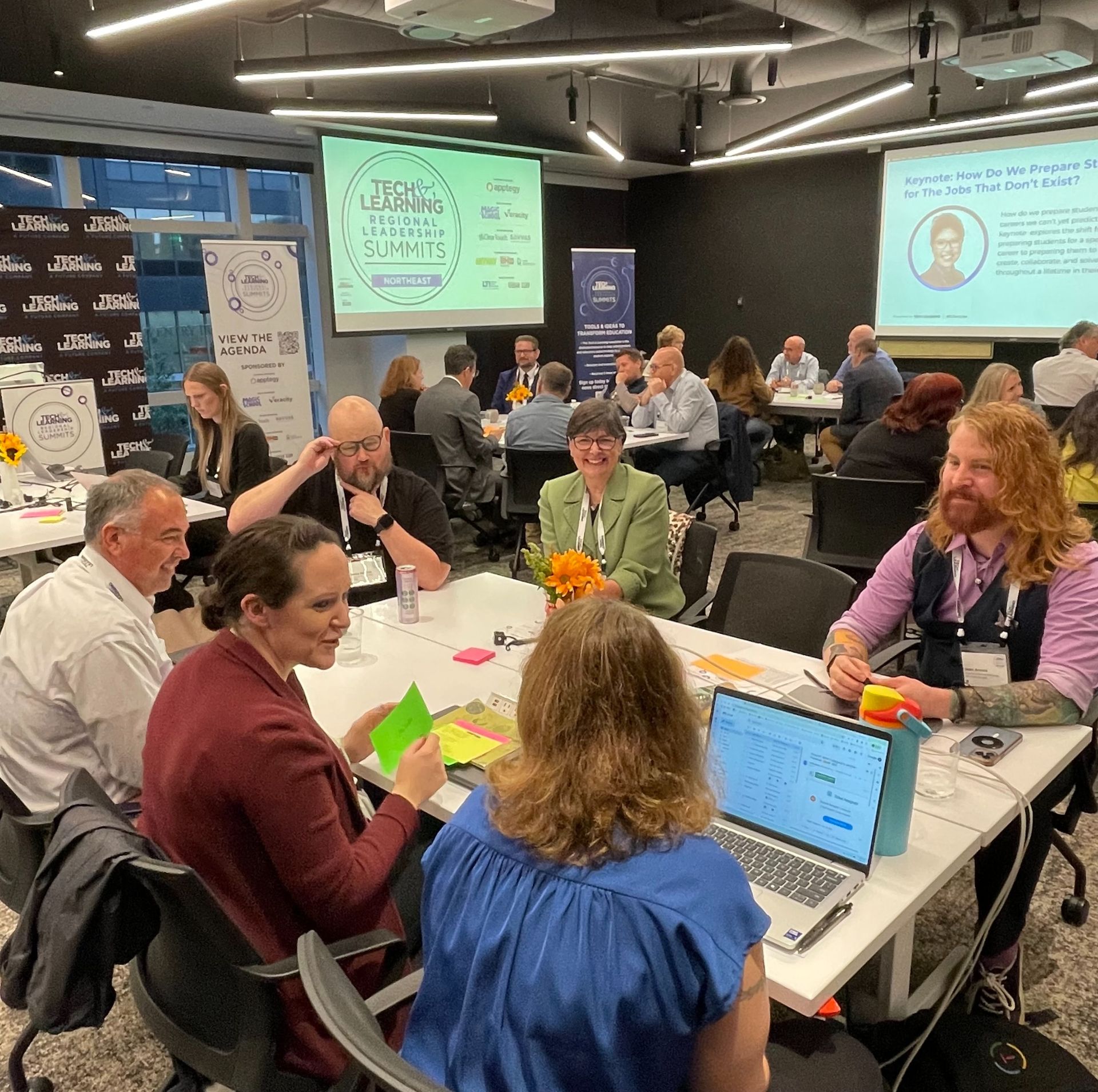
Using AI to Support College-Level Teacher Certification Program
Executive Director of the Temple University CTE Center Elizabeth Diamond’s roundtable discussion focused on practical ways AI can support educators working toward teacher certification. Participants explored how to introduce AI to educators, particularly CTE teachers, who may enter the classroom before completing certification. One idea was to pair lesson-planning instruction with guided AI use, helping educators draft lessons, improve their own teaching voice and tackle everyday classroom tasks.
Diamond emphasized that AI should support, never replace, educators’ understanding of teaching frameworks. Teachers also need a solid foundation in their subject areas to evaluate AI-generated material and decide whether it’s accurate and useful for students.
The conversation also touched on concerns about placing educators with limited teaching preparation in classrooms. Diamond discussed potential solutions, such as undergraduate programs and partnerships with universities.
Updated Programming and the Implementation of Technology
Troy Long, Director of CTE and Grants Administration for Mercer County Technical Schools, facilitated this group discussion, sharing his efforts for his organization.
Long talked about how they’ve reorganized schedules to provide opportunities for CTE pathways and the work that comes with that.
Long also spent a bit of time discussing costs associated with CTE programs, be it equipment or licenses, and the challenges of finding grants and other funding sources. He did stress that sometimes he gets funding because the paperwork involved deters others and he perseveres. He also detailed balancing Title I, II, and IV funding and CTE funding, as well as providing data to justify requests and aligning needs properly to match the funding requirements. “CTE is great for explaining the ‘why,’ for learning,” Long said.
Long stressed his program’s commitment to doing whatever possible to beef up technology for the students, saying, “If we’re not at the cutting edge of technology, then what’s the purpose?” To that extent, he explained how they were able to find funds to buy eight virtual reality anatomy machines at $80,000 each plus shipping. He added that every pathway has certain stipulations, so it’s important to ensure that the technology is there to support it, which often requires constant upgrades.
To also help manage costs, Long suggested sharing tech with other programs – such as using CTE funding to buy equipment for other programs, or getting the tech coordinator to help facilitate purchases.
He also said it’s critical to make sure that there’s teacher buy-in so equipment is being used, and it’s always useful to attend events to find out new innovative products that are available.
Finally, Long discussed the concept of “Nice to have” vs. “Need to have,” adding that having industry professionals as partners is essential as they can validate the costs to make sure the right tech is on hand.
Visual Art Artificial Intelligence Guidelines
Elizabeth Stuart, Visual Art Supervisor for Prince George’s County Public Schools, began the roundtable discussion by explaining how high school students in her district have access to select AI tools for creative coursework. Students combine traditional photography and design skills with AI-assisted tools to create a final project. One example Stuart shared was a graphic novel activity in which students used AI to help develop the story before diving into the creation process.
As the discussion wrapped up, Stuart pointed out that AI is likely to remain part of students’ lives, making it valuable for her to discuss topics such as deepfakes and the ethical uses of AI both inside and outside the classroom.
A Boots-on-the-Ground Look at Visual Arts CTE Program at Brooklyn Tech
This panel discussion explored how Brooklyn Technical High School builds inclusive, industry-connected CTE pathways while still balancing student choice, staffing, equipment, compliance and industry partnerships. The school has a graduation rate above 98%, and 99% of students have postsecondary plans. Many are first-generation college students or come from immigrant families.
Mark Rodriguez, Assistant Principal of Engineering/CTE at Brooklyn Tech, dove into credentials such as OSHA training and FAA exams that can support internships. He also spoke about costs, citizenship documentation and how limited test-center capacity and scheduling can create barriers. He emphasized making industry participation an easy lift: start with a small group of students, consider early-career employees as mentors and address students’ workplace readiness before expanding.
Gustave Trombetta, Assistant Principal: Industrial Design, Architecture, Media Communications, Visual/Performing Arts, spoke on the importance of designing programs for the entire student body to prevent leaving talented students behind. Trombetta explained that courses should connect through vertical and horizontal alignment rather than work as silos.
The panel also highlighted the challenges of bringing CTE programs to life. Rodriguez and Trombetta spoke on the importance of working with facilities leadership and planning for equipment, building access and infrastructure needs.
The key takeaways from the panel: Be realistic about what’s possible. CTE educators should use their time and resources wisely and avoid becoming so attached to a single idea that they lose sight of what will actually work.
Data That Delivers: Using AI in MTSS to Drive Workforce Readiness
Mike Gaskell, Principal at Central Elementary School in East Brunswick, New Jersey, looked at how AI could streamline MTSS for classroom teachers, and work more efficiently.
Gaskell pointed out how studies have shown that teachers don’t have enough time to look at students’ needs, so if you can automate the non-thinking stuff (such as crunching data), then you can spend more time on figuring out how to help students, which involves human critical thinking. He said that AI can act as an active data interpreter, early-warning detector, and intervention co-designer for K-12 educators.
Gaskell talked about how he used AI to crunch data about students who were struggling, and unsurprisingly, it showed that attendance for economically disadvantaged students was a problem, which caused literacy scores to suffer. Once his suspicions were confirmed, he was then able to set goals and plans to address the issue. He detailed a three-step process for this:
Step 1: Data Input – Anonymized table showing 10th graders dropping from Tier 1 to Tier 2 due to morning tardiness and concurrent ELA grade drops.
Step 2: Role Prompt – “Act as an MTSS coordinator. Based on this tardy/ELA data, suggest a 4-week Tier 2 plan and a 1-page daily student checklist.”
Step 3: Dual Assets – Generates a structured educator intervention framework alongside a clean, scannable goal-tracking sheet for student binders.
Gaskell also referenced the Kauai longitudinal study that tracked Hawaiian kids over 40 years who were at risk. He noted that if we know the factors that can help students, then why not use them over and over?
Finally, Gaskell stressed that it’s important to think of AI as an assistant, not as the lead for any solution.
