Michael Herrera, Executive Director of Upper Bucks County Technical School in Pennsylvania, was recently recognized with a Tech & Learning Innovative Leader Award for his School to Work and other unique programs aimed at future success beyond the classroom. His philosophy is simple: Technology makes learning visible.
The dedicated edtech leader shares tips on how to incorporate a focused career-connected learning program for kids at every stage of their K12 school career.
The Proof is in the Piggy Bank
“One of the areas that we’re most proud of is our School to Work program,” says Herrera. “Our students earned over $1 million just during the school day last year, working over 67,000 hours, not including nights and weekends. We are very fortunate to have over 200-250 business industry advisory committees that help and partner with our students.”
Upper Bucks County Technical School was a national CareerAZ finalist for their School to Work program.
“During COVID, while a lot of the schools were shutting down, many of our students were frontline workers in healthcare and the skilled trades,” says Herrera. “We created a COVID safety plan and we invited the parents on the job site with the students meeting their mentors. We continue that today, because it became a Best Practice. For many of the students, it’s their first job.”
Out of those students in the program, 93% were offered full-time employment.
“That becomes a special moment because students just don’t have the ability to find work at this time,” Herrera says. “There’s just less and less opportunities for the students nowadays.”
Career-Connected Learning
Herrera’s results can be seen in more meaningful ways than just financial. Setting up students for success also means setting up them for happiness in their future plans.
“We believe very strongly and deeply about the power of career-connected learning,” says Herrera. “I’ve developed a framework: Discover. Validate. Connect. The Discover aspects help students recognize what their talents are. We use the term ikigai, which we see as ‘purpose and passion behind education, what the world needs, what you love, what makes you money.’”
Students validate that through career-connected learning, meaningful experiences, and industry-recognized credentials. Outcomes connect to both education and career opportunities in the labor market.
“I’ve heard surveys say 77% of college graduates learn more on the job than they do at university, 68% of adults hate their job, etc.” says Herrera. “We try to connect students with their strengths, their talents, their passions. When you find what you love, it’s great.”
Herrera’s team has been really staunch advocates for putting ESSER funds toward technology to help guide their school, particularly virtual reality and platforms such as zSpace.
“Both our instructor and myself tout the importance of allowing students to visualize, practice technical concepts in a more safe setting,” says Herrera. “We’ve worked with NASA HUNCH. We put parts into space with our students. Currently, we’re working with drones. This is leading the way into merging fields across all of our content areas–law, EMS, construction– the practical applications that are becoming more and more important.”
Herrera is working with career readiness and development company Pathful, whose services have proved very helpful. The district also uses specialized machines for training, such as ultrasound for health occupations.
“We just got a Canon ultrasound machine,” says Herrera. “The students were able to show how the ultrasound can visualize structures within the knees, which is pretty exciting for high school students. To access these programs and think about a future in healthcare, to take part in the hands-on simulation is a meaningful experience.”
Engineering skills can also be practiced via augmented and virtual reality.
“Our instructor allows our freshman students who haven’t had the opportunity to work on cars to use those tools as a safer mode to learn,” he says. “They’re comfortable with the tech and have a level of familiarity from time spent on their video games. When they go to the ‘real engine’ in the shop, they already know how to take it apart. They know the size of the ratchet, they know the size – they just have a lot more confidence going in.”
This helps to keep students engaged, especially since CTE gets students to school, to graduation, and then into a thriving career.
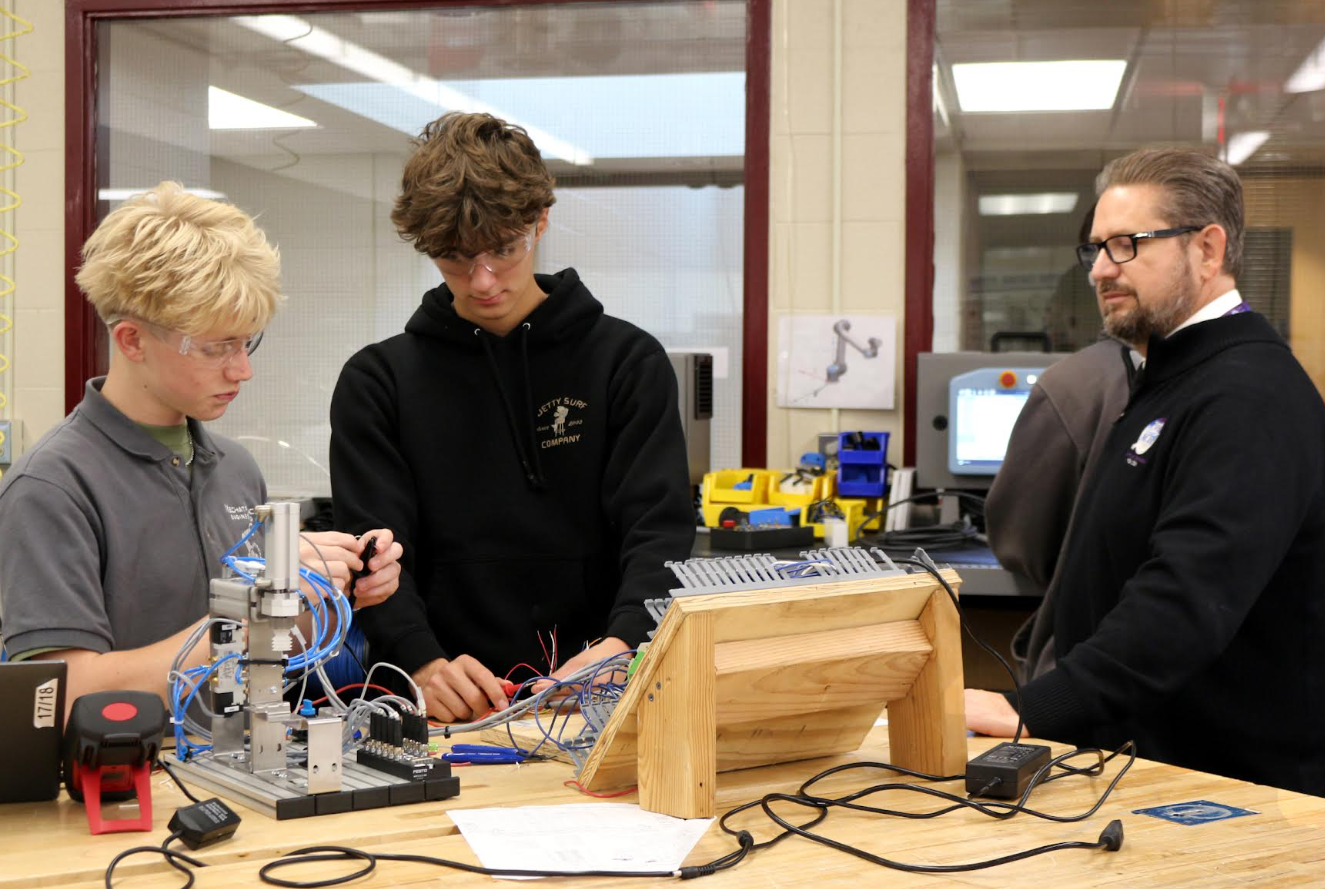
“Our students never have to say, ‘Why are we doing this?’” Herrera says. “When it comes to the academic connection with our machining, for example, the students are performing trig before they even know it’s trigonometry. It just takes the stigma away from that.”
Validating Their Language Seals Success
Herrera considers the whole student when finding paths to a successful future.
“About three or four years ago, I went to Language Testing International,” says Herrera. “I had shared the stage of the Seal of Biliteracy Summit with someone from Children’s Hospital of Philadelphia. Among their staff they had 120 languages spoken, with 20 full-time translators. And they still needed qualified people.”
Although the school doesn’t teach all the languages available through the program, Herrera went to work ensuring students who spoke those languages already got credit.
“So many of our students have that hidden superpower, that talent,” says Herrera. “Through an assessment, we have credentialed students in Spanish, Turkish, Arabic, and Mandarin. We don’t teach the language, but we validate it.”
This falls under “Validate,” the second part of Herrera’s framework.
“It just gives them a leg up, especially from the cultural component,” he says. “That part AI can’t replicate. So if you are fluent in the language, it goes a long way. It’s an asset, and business and industry needs that.”
4 Ways to Incorporate a Career-Connected Program in Your District
According to Herrera, creating a successful program is about student engagement: “Focus on the task at hand, have really great teachers and support staff. We hire for leadership. We hire for character. Our instructors both wear education and workforce development hats. They have to be the bridge between education and industry.”
- Partner with industry, work with employers to provide access. Making that connection to the curriculum brings everything alive.
- Heavily invest in teacher development, give them the training and support.
- Let students demonstrate learning. This helps them explain the why’s and demonstrate skills.
- Connect learning to careers. This helps students understand why skills matter and where they can lead.
Tools They Use
- CTE360 — student competency and task tracking
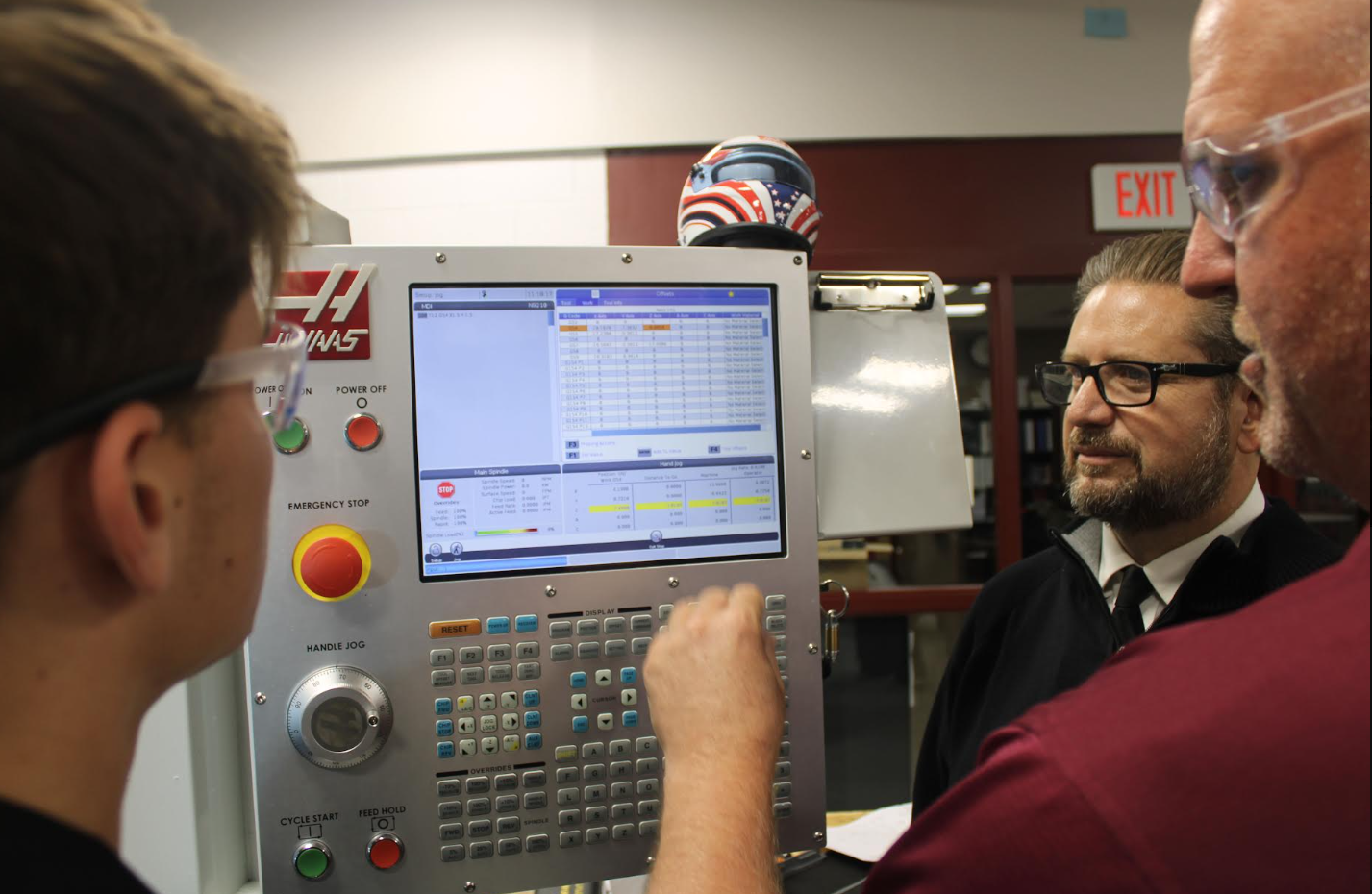
- zSpace immersive AR/VR technology
- Demco Automation industrial assembly training system
- Subaru University automotive training resources
- CNC and precision-manufacturing equipment
- Automotive diagnostic equipment
- Drone flight and training systems
- Google Workspace
- Canvas
- PowerSchool
