After being a superintendent for more than 20 years, one thing has become abundantly clear to Quintin Shepherd, who leads Pflugerville ISD in Texas.
“What I’ve come to realize is that there are no lesser paths to a great education,” says Shepherd. “Period. Full stop. There are no lesser paths.”
In conjunction with that, Shepherd suggests that many districts focus on getting students to graduate, but not necessarily for what happens next.
“We prepare kids by walking them up to the launchpad, and having done and provided everything we can, and then on graduation day we say here you are on the precipice of the rest of your life. Good luck! We hope you can ignite,” he says.
To help rectify that, Shepherd advocates for simplifying the conversation. In his district, he has championed providing the students with clear pathways, or what he calls The Three Es Promise: Employment, Enlistment, or Enrollment.
“It’s easy, every second grader knows what it means,” says Shepherd, who was recently honored with a Tech & Learning Innovative Leader Award for this and other efforts. “Employment–high-wage, industry-based certifications, high-skilled jobs. Enlistment–into the armed forces, letter in hand. Or enrollment–’I’ve been accepted to a college or university.’ If every single student who walks across the graduation stage has one of those in hand, and you can have one of those in hand on graduation day, then what it says is that you’re not lost after you leave school Friday.”
Shepherd’s goal is to be able to guarantee 100% of his students–special education learners, ELL learners, every learner–are covered by that promise, and the successful launch that comes with it, by 2029.
“I’m not aware of any school district in the country that can make that kind of a promise to parents or to their community,” he says. “Your diploma is not the goal. It’s not the ceiling we’re reaching for. It is the expectation. It is the floor. You will graduate from high school, but we live in a world where that’s not enough. And we’re not doing our job as a school district if that’s all we’ve given you.”
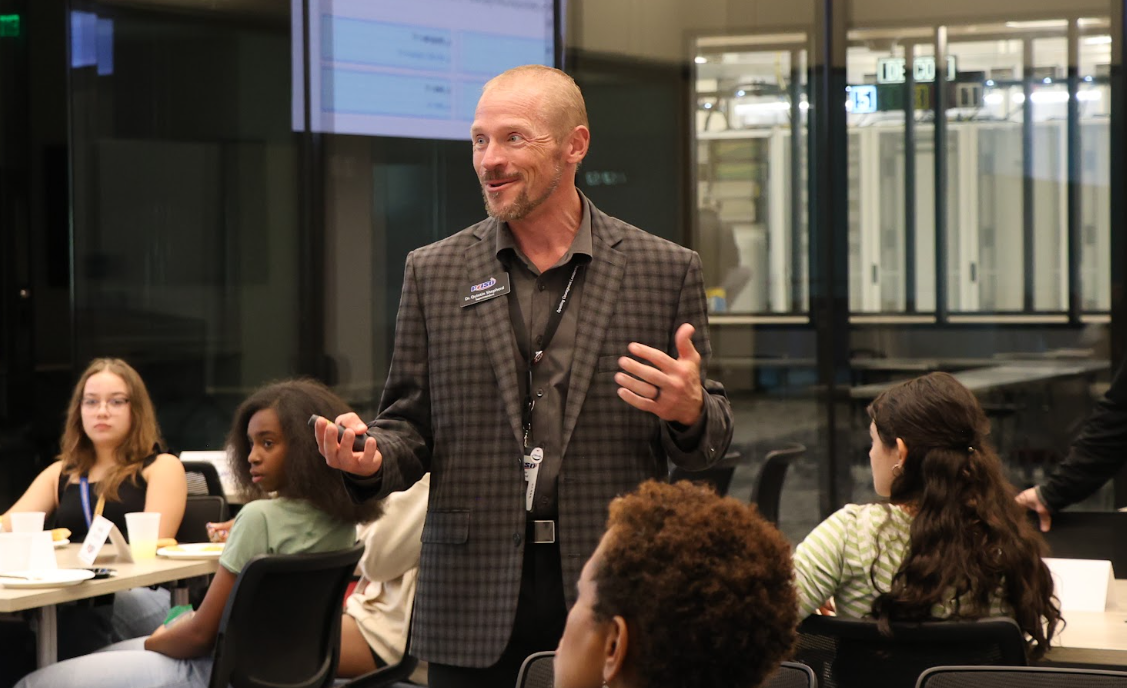
Concentric Circles Of Leadership
The idea of finding your own pathway is a familiar one for Shepherd, who started out as a custodian in his first district before moving up the ranks as a music teacher, elementary school principal, high school principal, and then superintendent–all by the time he was 27.
“I learned very very quickly in my career that there’s really just two types of people who work in an organization: Those who teach and those who support teachers,” Shepherd says. “And I realized that I had it in me to be a good teacher, but I probably had more potential being a great supporter of teachers, which can take many different routes.”
Traversing that path has provided Shepherd with valuable insight, which he has shared in multiple books he’s written (including The Secret To Transformational Leadership). It’s also helped him form practical theories to build leadership, including his three-part concentric circle concept.
“The biggest circle is like a social network,” he says. “I go to a superintendent conference or an event like Tech & Learning’s, and meet some superintendents. These people I can hang out with, talk with, I see them, and that’s great.”
The next circle inside that is forming a strategic network.
“So, the power of going to these conferences is, ‘Hey, I heard this person talk about this very specific problem that they’re solving, and this is how they solved it,’” Shepherd says. “And they have a genius in this area because they’ve spent years building something out, and I need to get them as part of my strategic network so that when I’m faced with this problem, I now have somebody, a genius who I can call who has years of experience that I can now draw down from.”
The innermost circle then is professional learning.
“These are people who you realize their connection to you on a personal, strategic level is all about your own leadership development and growth,” Shepherd says, adding these should be colleagues who have a way of approaching problems differently. “I’d like to be able to call you when I’m struggling, and I don’t even know what the problem is. But I don’t want you to help me solve the problem. I want you to push back on me as a leader, and I’ll do the same thing for you. But that’s got to be our agreement. And if I ever cross that line and I start asking you strategic questions, call me out on it and say, ‘Quinton, that’s not what we’re talking about. Like, how are you growing as a leader? What’s pushing you right now as a leader? What’s keeping you up at night?’ Those types of conversations.”
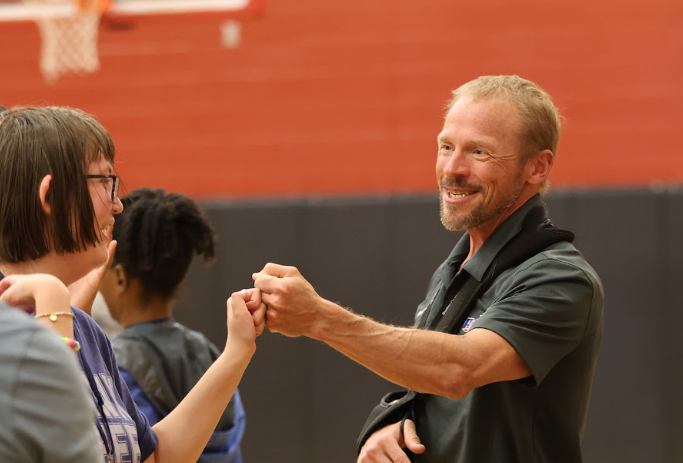
Step Back Before Stepping Forward
Ultimately, Shepherd stresses understanding that there are multiple pathways for students to find career success, and that district leaders need to recognize and understand that.
“And what that’s meant for me is to like really step back,” Shepherd says. “Step back, and reframe the whole concept of what we’ve been building in schools. And there are two things that are self-evident to me. Number one, we still have primary pathways and secondary pathways. So, let’s just get rid of that. Let’s just say that all pathways are a pathway to a great education. Secondly, we’ve got ourselves wrapped up in all the metrics and the analytics and how we process this and how we track it, and it’s largely lost on the public. So, let’s simplify the whole conversation. Again, there are no lesser pathways.”
Tools They Use
“The common thread is that these tools help me listen more broadly, think more deeply, and stay organized enough to turn learning into action,” says Shepherd.
- Thoughtexchange: “Helps us gather stakeholder perspectives, surface shared priorities, and bring more voices into district decisions.”
- ChatGPT: “I use it as a thinking partner for analyzing information, testing assumptions, developing ideas, refining communications, designing university coursework, and reflecting on my leadership.”
- Plaud: “Helps me capture conversations and revisit the ideas, insights, and action items that emerge.”
- Google Workspace (G Suite): “Supports my daily communication, collaboration, document development, and scheduling.”
- Apple Notes and Reminders: “Help me capture ideas as they occur and keep track of commitments and follow through.”
- Kindle and Audible: “Both are central to my ongoing learning. They allow me to make reading and listening part of my daily routine.”
