
Sometimes teachers need a quick, useful resource that can slot into a lesson without hours of preparation, which is exactly what Rumie is designed to provide.
Rumie Learn is a nonprofit learning platform built around short, interactive “Bytes,” with more than 2,500 published learning experiences covering everything from digital literacy and career skills to health, financial planning, and learning strategies. The platform has reached more than 2.5 million learners, with new Bytes added regularly.
This doesn’t use lengthy courses, but instead breaks down subjects into small chunks that can generally be completed in around five minutes. That makes it great for teachers looking for starters, discussion prompts, flipped-learning activities, or quick ways to introduce a new topic.
What is Rumie?
Rumie is a free online library of microlearning content designed to make useful knowledge easier to consume and remember.
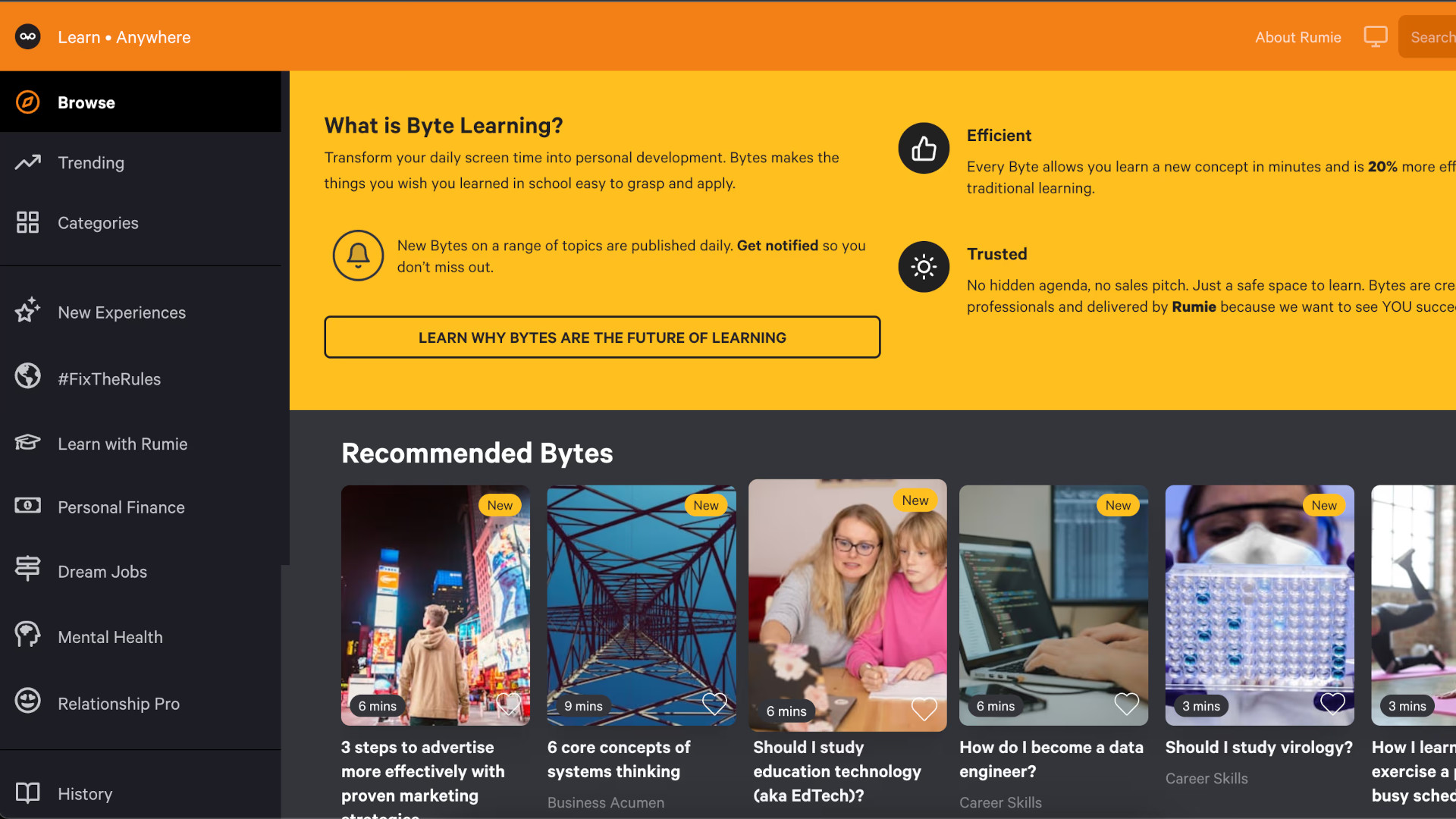
The basic unit is the Byte. These are short learning experiences, generally under 10 minutes, built around a specific concept or practical skill rather than an entire subject. Rumie says its Bytes use a chunked structure intended to make learning more efficient, while its lessons commonly combine short pieces of text with images, GIFs, memes, and quizzes.
That format makes Rumie rather different from a traditional learning management system. It doesn’t have a huge course to enroll students in and work through from beginning to end. Instead, teachers can search the library for a specific idea and use an individual Byte when it makes sense for their lesson.
The library covers categories including Career Skills, Digital Literacies, Civics, Health, Business Acumen, Learning to Learn, and Innovation. More specific topic tags are also available, making it easier to find resources around particular skills or learning approaches.
Importantly for schools, the content isn’t restricted to traditional academic subjects. A teacher could use one Byte to introduce digital citizenship, another to explore critical thinking, and another to help students understand financial planning.
That gives Rumie a useful role alongside existing classroom resources rather than trying to replace them.
How does Rumie work?
The simplest way to use Rumie Learn is to search its library, find a relevant Byte and share it with students.
Rumie also has guidance specifically for teachers on using Bytes as part of a lesson. Its recommended approach is to choose a Byte based on the skill being developed, share it with students, and then use the content as a starting point for discussion and application. That means a Byte doesn’t have to be the lesson. It can be the thing that gets the lesson moving.
For example, students could complete a five-minute Byte before class as a flipped-learning activity. The teacher can then spend classroom time discussing what students learned, challenging their understanding, and asking how they could apply the idea.
Alternatively, the whole class can work through the Byte together. Rumie’s own lesson-planning example suggests reading a Byte as a group or having students work in pairs before discussing their thoughts as a class.
This is where the short format becomes useful. A teacher can introduce a new concept without committing an entire lesson to a digital course, leaving plenty of time for explanation, debate, practical work, or assessment.
The platform is also designed around accessibility of learning rather than assuming students have hours available. Rumie describes its Bytes as quick, commitment-free learning experiences that can build toward broader skills over time.
What are the best Rumie features?
Thousands of short learning resources
The biggest advantage is simply the size and breadth of the library. Rumie currently lists more than 2,500 published Bytes, while its homepage highlights topics ranging from career skills and digital literacy to health, civics, and learning strategies.
New Bytes are published regularly, giving teachers an expanding pool of material from which to draw. That makes the platform useful when you need something specific rather than a complete curriculum.
Microlearning that fits into existing lessons
A five-minute resource is much easier to fit into a normal lesson than a 40-minute online course. A Byte can become a starter activity, homework task, revision exercise, discussion prompt, or introduction to a new topic. Teachers can also combine several Bytes around a broader theme.
Rumie’s own classroom guidance suggests using Bytes in sessions ranging from 30 to 60 minutes, with time built in for discussion and applying the learning.
Interactive content
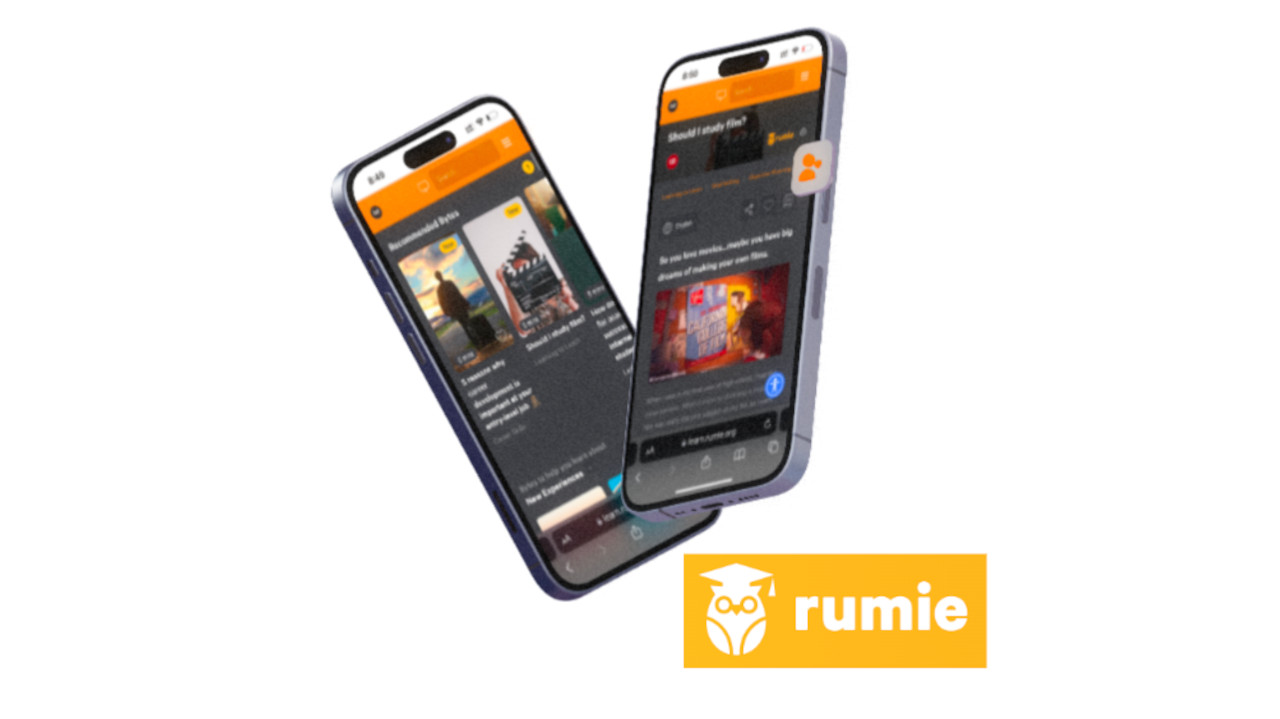
Rumie uses visual content, GIFs, memes, quizzes, and other interactive elements to make short lessons feel less like reading a textbook. The format is designed to keep the learner moving through a single idea rather than presenting a large amount of information at once.
Content created by professionals
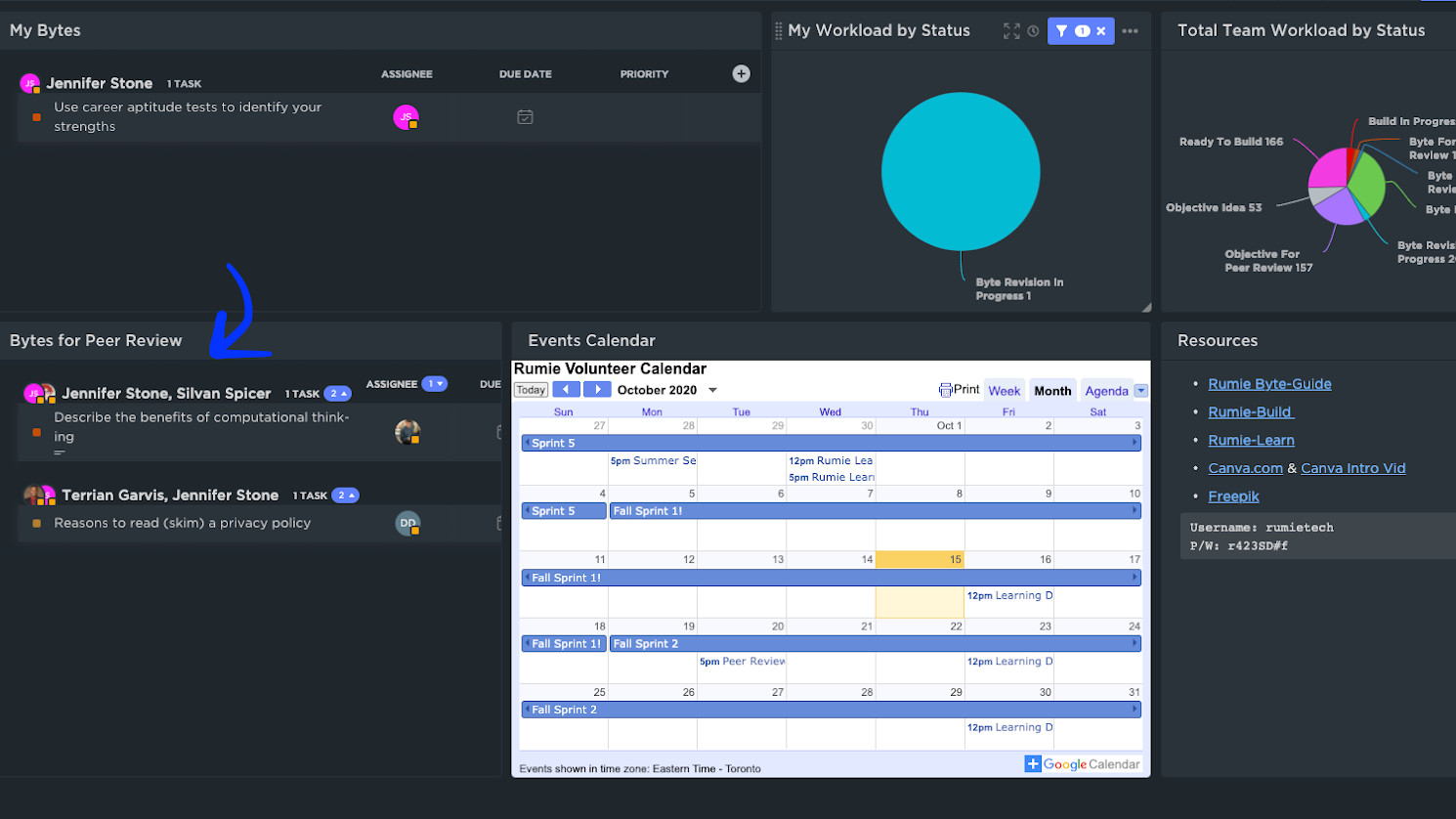
Bytes can be produced by corporate employees taking part in volunteer workshops, community partners, and Rumie’s own learning designers. Rumie says its learning designers plan, author, and peer-review Bytes, while the organization vets content against its standards.
Each Byte also identifies its author and, when applicable, the organization behind the content. That provides teachers with some useful context about from where a particular learning resource came.
Useful beyond traditional subjects
Rumie can be valuable for the skills that don’t always fit neatly into a timetable. Its library includes resources covering areas such as communication, career planning, financial skills, digital citizenship, mental health, and learning strategies.
Classroom-specific resources are available, covering topics such as inclusive classroom management, facilitation techniques, and accessible worksheets. That makes it a potential source of material for PSHE, pastoral learning, careers education, digital citizenship, and tutor time as well as more conventional lessons.
How much does Rumie cost?
Rumie is free to use. That’s one of its biggest attractions for teachers and schools. Rumie is a nonprofit organization whose stated mission is to make learning accessible, and its public Learn platform provides access to its library of Bytes without charging learners for the individual resources.
Separate Rumie products are aimed at organizations, including Rumie Connect and Rumie Build, which allow for the curation of learning experiences or the ability create their own microlearning content. Those are part of Rumie’s broader learning platform rather than requirements for using the public Rumie Learn library.
For an individual teacher looking for ready-made learning material, however, there’s no subscription to pay for simply browsing and using the public Bytes.
Rumie Tips
- Use Bytes as lesson starters
Don’t feel you need to build an entire lesson around Rumie. Find a five-minute Byte that introduces the concept you want to teach, then use it as the springboard for your own explanation or activity. - Try flipped learning
Send a Byte to students before a lesson and use the classroom time to discuss it. This allows students to encounter the material before they arrive and gives teachers more time for questions and application. - Make students explain the learning
After completing a Byte, ask students what surprised them, what they found useful and how they could apply the idea. This turns a short digital activity into a discussion rather than another piece of passive screen time. - Build a themed sequence
Search for several Bytes around a common subject and use them across multiple lessons. Because each resource focuses on a relatively small concept, teachers can gradually build a broader learning journey without asking students to complete one enormous course. - Let students explore independently
Rumie’s huge range also makes it useful for independent learning. Ask students to choose a Byte on a subject they know little about, complete it and then present the most useful thing they learned to the class.
